The day a software application launches is the day a new responsibility begins. Users create accounts, mobile operating systems change, payment providers update APIs, infrastructure bills arrive and staff discover new requirements. Even software that does not gain a single new feature needs attention over time.
For a business deciding how much to spend on development, understanding the cost of maintaining the product is just as important as comparing the original build prices.
What should be included in a maintenance budget?
Separate predictable engineering support, infrastructure, third-party services and planned feature work. Add contingency for incidents, migrations and unexpected changes. The right budget depends on the application's risk, traffic, age, architecture and required response times. A simple appointment platform and a payment-heavy enterprise system should not have identical maintenance arrangements.
Four different types of maintenance
| Type | Examples | Why it matters |
|---|---|---|
| Corrective | Fix broken checkout or reports | Restores expected behavior |
| Preventive | Dependency updates, backup testing, security review | Reduces avoidable incidents |
| Adaptive | Update for operating system or provider changes | Keeps the system compatible |
| Perfective | Improve performance or usability | Supports growing customer needs |
Agree which types are covered by the retainer. A large new feature may be a separately scoped project. For Android apps distributed through Google Play, plan time to check the Android target API requirements for Google Play before a release.
Separate recurring vendor charges from engineering fees
Your application may use database hosting, object storage, authentication, email, SMS, monitoring and payment providers. Their charges can vary with usage and exchange rates. Keep billing currency, included quotas and tax treatment in separate columns so changes in price and usage are easier to explain. An engineer's retainer does not automatically include all those bills.
Build a monthly operating sheet that lists each provider, account owner, renewal date, billing currency, typical usage and alert threshold. Assign someone to investigate an unusual increase. An uncontrolled API loop or growing log storage can create a bill even when customer demand is unchanged.
A transparent example maintenance budget
Imagine a small application that has already been released. The following is a hypothetical planning scenario, not a market average or a Nivarix quotation.
| Monthly item | Example allocation |
|---|---|
| 12 engineering hours × ₦20,000 | ₦240,000 |
| Hosting, database and storage | ₦45,000 |
| Monitoring and messaging | ₦25,000 |
| Contingency for separately approved work | ₦40,000 |
| Total planning allocation | ₦350,000 |
| Annual planning allocation | ₦4,200,000 |
Actual expenditure can be lower or higher. Replace every input with the agreed rate, current bills and relevant operating requirements. This example excludes taxes, major feature projects and unusually expensive incidents. Do not buy the same number of hours simply because it appears in a table.
Define the support agreement properly
A support-level agreement should define operating hours, communication channels, covered environments and severity levels. Distinguish response time from resolution time: an acknowledgment within an hour does not mean a complex outage will be resolved within an hour.
For example, a checkout outage may require urgent investigation, whereas a cosmetic issue can enter the normal backlog. Document who can declare an incident, authorize changes and communicate with users. Define what happens when included hours are exhausted, and how unused hours are treated.
What an inherited application needs before maintenance
A new team cannot responsibly promise ongoing support for code it has never inspected. Start with an authorized audit covering deployment, database integrity, dependencies, existing defects, monitoring and recovery. Establish a baseline before accepting service commitments. Some risks may need a separate modernization project.
How to know whether the support is working
Review service availability for critical journeys, unresolved defects by severity, repeat incidents, dependency update status, backup restore tests and the time taken to deliver agreed work. Monitor the application from the user's perspective, not only whether the server responds. A server that returns HTTP 200 while its checkout fails is not providing a healthy customer experience.
A monthly engineering report should describe what changed, why, how it was tested and what remains risky. Give the business a readable summary rather than an unexplained list of commits.
Frequently asked questions
Can I pay only when something breaks?
Yes, but consider the risk of delayed help and deferred preventive work. Agree the arrangements in advance.
How much should I reserve annually?
Build a budget from expected engineering effort, provider charges and contingency rather than relying on a universal percentage of the development price.
Is hosting the same as maintenance?
No. Hosting provides infrastructure; maintenance includes work needed to keep the software operating and evolving.
Plan for the life of your software
Nivarix offers ongoing support and managed engineering. Bring the current application's architecture, business-critical workflows and existing support arrangements so the scope can be matched to the actual risk and work required.
Discuss support for your application
Related guides and services
- Assess inherited software before taking over support
- Compare development and operating budgets
- Budget for website maintenance separately
- Explore managed engineering
Sources
Checked 29 November 2026.
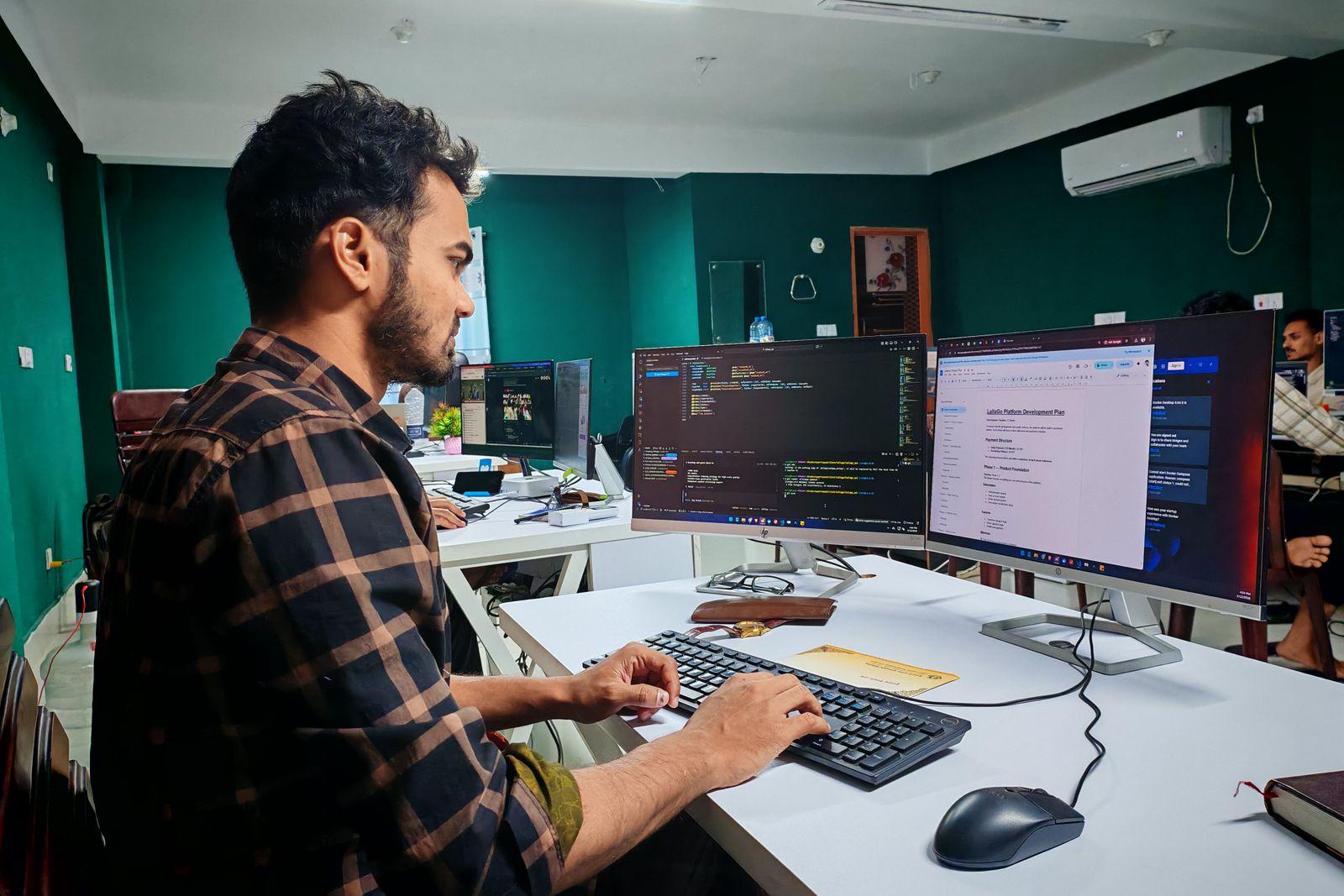
Cover photograph by Zayed Hossain, via Pexels.