
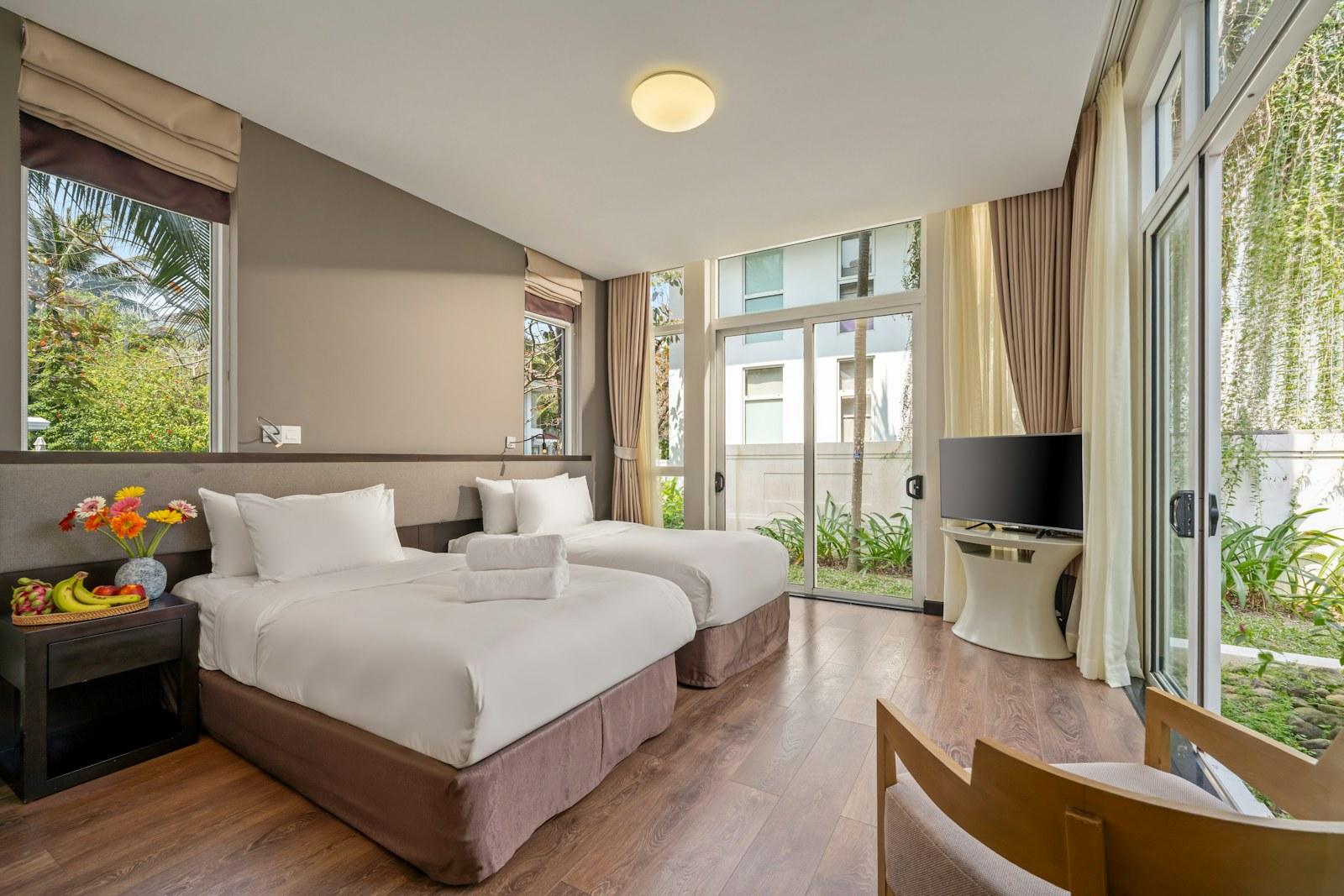
A hotel website should help a guest decide whether a property meets their needs and make it easy to request or complete a booking. Yet “booking website” can mean anything from a room enquiry form to an integrated reservation platform.
The most important budget decision is whether your website will collect booking requests, use an existing booking engine, or manage availability and payments itself.
2026 hotel website cost: a useful starting point
Public Nigerian pricing guides vary by scope. For example, Linestech's hotel website guide (https://www.linestech.com.ng/blog/hotel-website-design-in-nigeria/) lists indicative one-off bands of around ₦150,000–₦500,000 for a small guesthouse site, ₦600,000–₦1,500,000 for a standard hotel site, and ₦1,500,000–₦3,000,000 for a more advanced hotel website.
These are market reference estimates from a third party—not Nivarix prices. Custom reservation systems, channel integrations, and multi-property operations need individual discovery.
| Booking model | How it works | Best fit |
|---|---|---|
| Enquiry form or WhatsApp | Guest requests dates; team confirms manually | Small property with manageable booking volume |
| Embedded booking engine | Existing reservation provider handles availability and booking flow | Hotel already using a suitable system |
| Integrated booking journey | Website connects to a provider's API, rates, and availability | More control over brand and experience |
| Custom reservation platform | Application manages rooms, holds, rules, payments, and changes | Complex needs not met by existing systems |
Why real availability makes the project more complex
A contact form can ask for arrival and departure dates without checking whether a room is free. A true booking system must answer harder questions:
- Does the room type exist and have inventory for every night?
- Are rates different on weekends or holidays?
- What happens when two guests try to book the last room?
- How long is a room held while payment is pending?
- Can staff cancel, move, or amend a reservation?
- How do payment failures, refunds, and chargebacks affect booking status?
If your property already uses a property management system or channel manager, ask whether it provides a reliable integration. Rebuilding the same logic from scratch may be unnecessary.
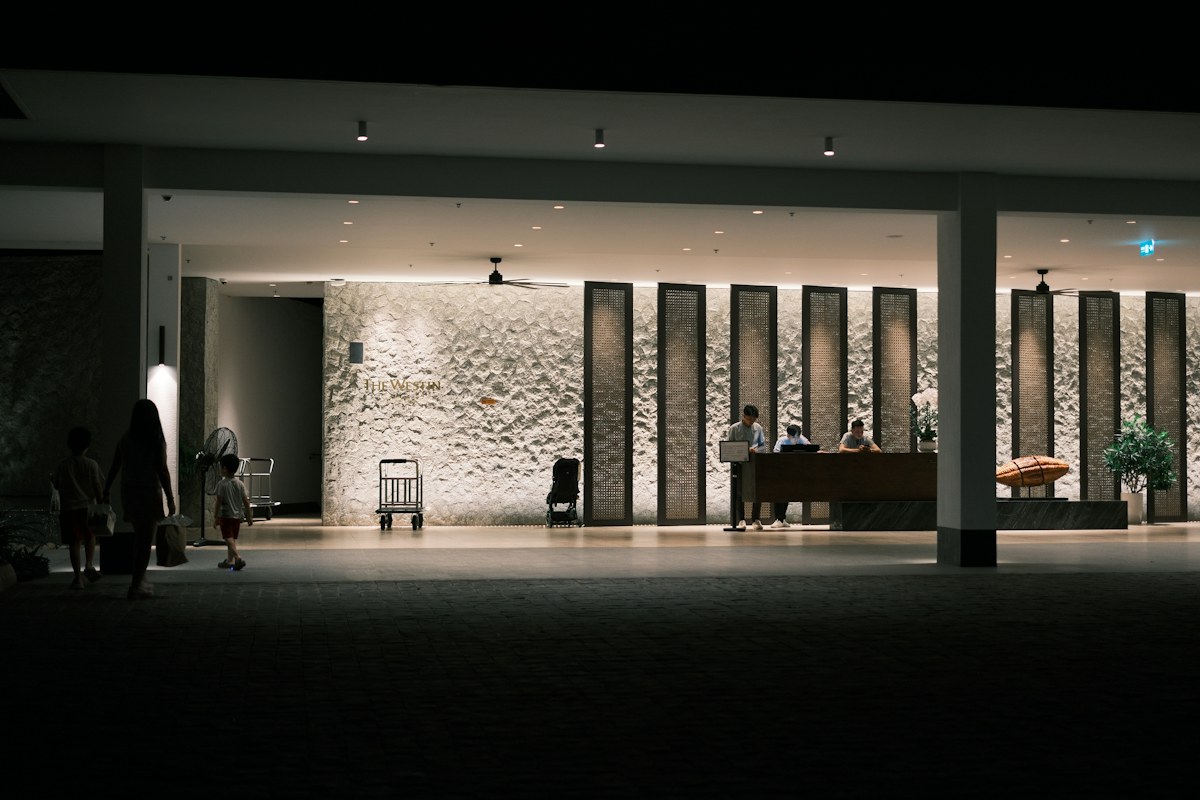
Six pages and experiences guests need
Room pages. Describe room types, amenities, occupancy, photographs, and relevant policies clearly.
Location and access. Explain how guests reach the property, with accurate maps and directions.
Rates and booking information. Clarify what is included, cancellation conditions, and whether rates are confirmed at checkout.
Facilities. Show dining, parking, events spaces, or other amenities you genuinely offer.
Contact and support. Make phone, email, WhatsApp, and check-in questions easy to find.
Mobile booking journey. Test date selection, guest counts, payment and confirmation on small screens.
Good photography and accurate room descriptions are often more important than elaborate animation.
What should a quotation include?
Request separate lines for website design, content creation, room data setup, booking-system connection, payment integration, testing, training, and ongoing support. Also ask whether the provider charges a monthly fee or commission for the booking engine.
A site connected to online payments must be tested for duplicate callbacks, abandoned payments, refunds, and reconciliation. Booking confirmation emails should reflect the real reservation state, not merely a form submission.
If the hotel has multiple branches, define how room types, staff access, prices, and reporting will work across locations.
Example: a 20-room hotel with a manual booking process
A hotel handling most reservations by telephone may benefit from a clear website, professional room pages, and a dated enquiry form. Staff would confirm availability using the existing reservations process.
That is a valid first phase if the team responds reliably and the website tells guests that requests are not instant confirmations.
After measuring the volume of enquiries and manual work, the hotel can decide whether it needs a booking engine, payment deposits, or automated guest messages.
How to evaluate the investment
Track qualified booking enquiries, completed direct bookings, abandonment during the booking flow, and the time staff spend managing requests. Traffic alone does not reveal whether the website is helping the hotel.
The value of direct bookings depends on room economics, cancellations, staffing, and channel mix. Avoid any vendor promising guaranteed occupancy simply from a website redesign.
Frequently asked questions
Do I need to build my own booking engine?
Usually not if an existing product meets your requirements. Integration can be more maintainable, but confirm support, provider fees, and data ownership.
Can I begin with WhatsApp requests?
Yes, provided you clearly communicate that reservations must be confirmed by staff and you have a reliable follow-up process.
Is a hotel website different from hotel management software?
Yes. The public website helps guests discover and book. Internal software can manage housekeeping, inventory, staff operations, and front-desk processes. Some systems connect, but they are not identical.
Define the right booking experience
Explore Nivarix's hospitality and hotel development services (https://nivarix.com/industries/hospitality). If you're considering a direct-booking website or need to connect an existing reservation system, tell us how bookings work today (https://nivarix.com/contact). The operational context is the starting point for an accurate scope.
Published budget references are indicative 2026 third-party figures reviewed November 2026 and do not constitute a Nivarix quotation.
Illustrative photography: cover by Tran Vinh; article photo by Duc Van, via Unsplash. People and places shown are not Nivarix clients or projects.