
A pressure worth addressing
Teams repeatedly copy information between tools
We identify where information is recreated, why tools do not share context and which source should become authoritative.
Website design, app development and custom business software.
Workflow and operations software
Nivarix maps how work, decisions and exceptions move through your business, then engineers an operational system that gives teams a clearer process and leaders a more dependable view.
For growing operations constrained by spreadsheets, repeated messages, manual approvals and disconnected tools.

The change we are working toward
A connected operating environment that reduces repeated work and gives the business a clearer view of what is happening.
When this is the right conversation
Repeated entry, hidden handoffs and informal exceptions consume attention, slow decisions and make the current state of the operation difficult to trust.
A pressure worth addressing
We identify where information is recreated, why tools do not share context and which source should become authoritative.
A pressure worth addressing
We move responsibilities, requests and approvals into visible workflows without ignoring how teams already communicate.
A pressure worth addressing
Dashboards and reporting are designed around the decisions managers need to make, with traceable source data behind them.
A pressure worth addressing
The system absorbs repeatable coordination so growth does not require administrative work to increase at the same rate.
What you can ask us to own
We start with the process and the people inside it, then connect roles, states, approvals, data, automation and reporting into one dependable operating environment.
Observe how work starts, moves, waits, changes and completes across people, spreadsheets, messages and existing tools.
Define the roles, data, process states and system boundaries for software that reflects the actual operation.
Give each team a useful view of current work, responsibility, exceptions and the next action that needs attention.
Remove repeat entry and routine coordination while connecting the external services the workflow still depends on.
Create trustworthy operational records, management reporting and a clear history of important decisions and changes.
How the work moves
We map the real flow first, then connect roles, records, approvals and integrations in releases the operating team can understand and adopt.
Observe
We map people, information, tools, decisions, delays and exceptions with the teams doing the work.
Current-state workflow and pressure map
Redesign
We simplify the flow, clarify ownership and decide what the system should automate, enforce or make visible.
Future-state workflow and product scope
Engineer
Roles, records, dashboards, approvals and integrations are delivered around complete working journeys.
Working operational modules and feedback
Introduce
Data, access, training, support and rollout are planned around the teams adopting the new workflow.
Production rollout and adoption plan
Improve
We can continue reducing friction, extending automation and improving reporting as real work exposes new priorities.
Continued operational improvement
Relevant Portfolio
These projects show how Nivarix connects workflows, roles, records, communication and visibility inside production systems.
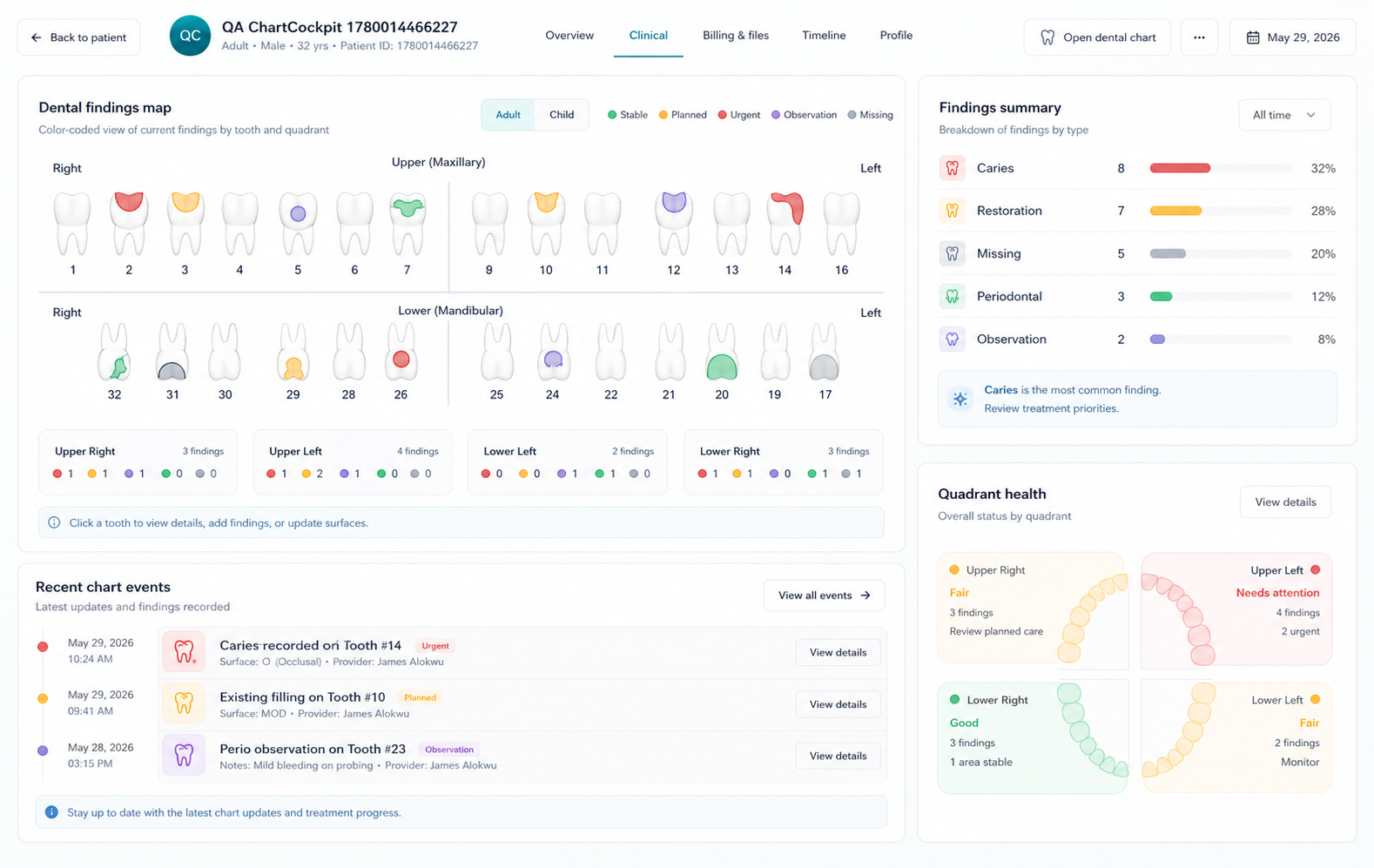
Dental healthcare
A dental practice platform that keeps appointments, patient records, treatment work and billing connected in one workspace.
Explore the project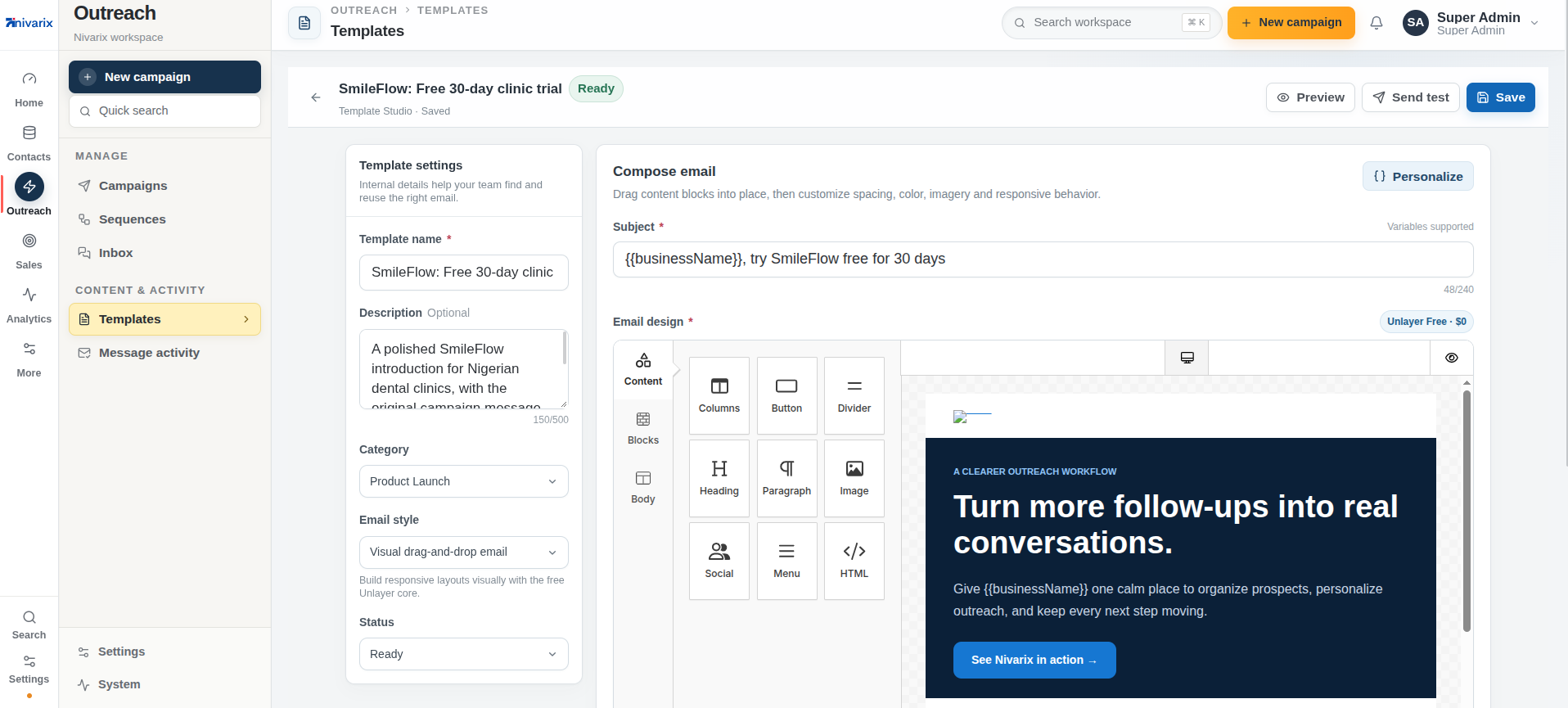
Business operations
An internal workspace for planning outreach, preparing campaigns and following what happens after a send.
Explore the projectChoose a practical starting point
The first engagement can clarify one operation, build a defined system or create a longer delivery path across connected workflows.
Process is still unclear
For teams that need to map the operation, identify the real constraints and define where custom software creates value.
Map the workflowPriority workflow is known
For a defined process that is ready to move from manual coordination into production software.
Discuss the systemSeveral workflows connect
For businesses that need continued delivery across multiple processes, integrations and reporting needs.
Compare engagement modelsYes. We first understand what the spreadsheets are doing, including informal rules and exceptions, then plan data migration and rollout around the people who use them.
Yes. Payments, messaging, accounting, identity, ecommerce and other platforms can remain part of the operation when they are useful. We design the contracts and failure handling that connect them reliably.
No. Starting with a high-pressure workflow often produces better learning and lower adoption risk. The architecture can still account for the wider operation and later integrations.
Reporting and operational visibility are designed from the decisions your team needs to make. Dashboards can show work states, ownership, exceptions and relevant performance data from the underlying records.
Start the workflow conversation
We will help you turn the real operation into a clearer system that can support the next stage of the business.