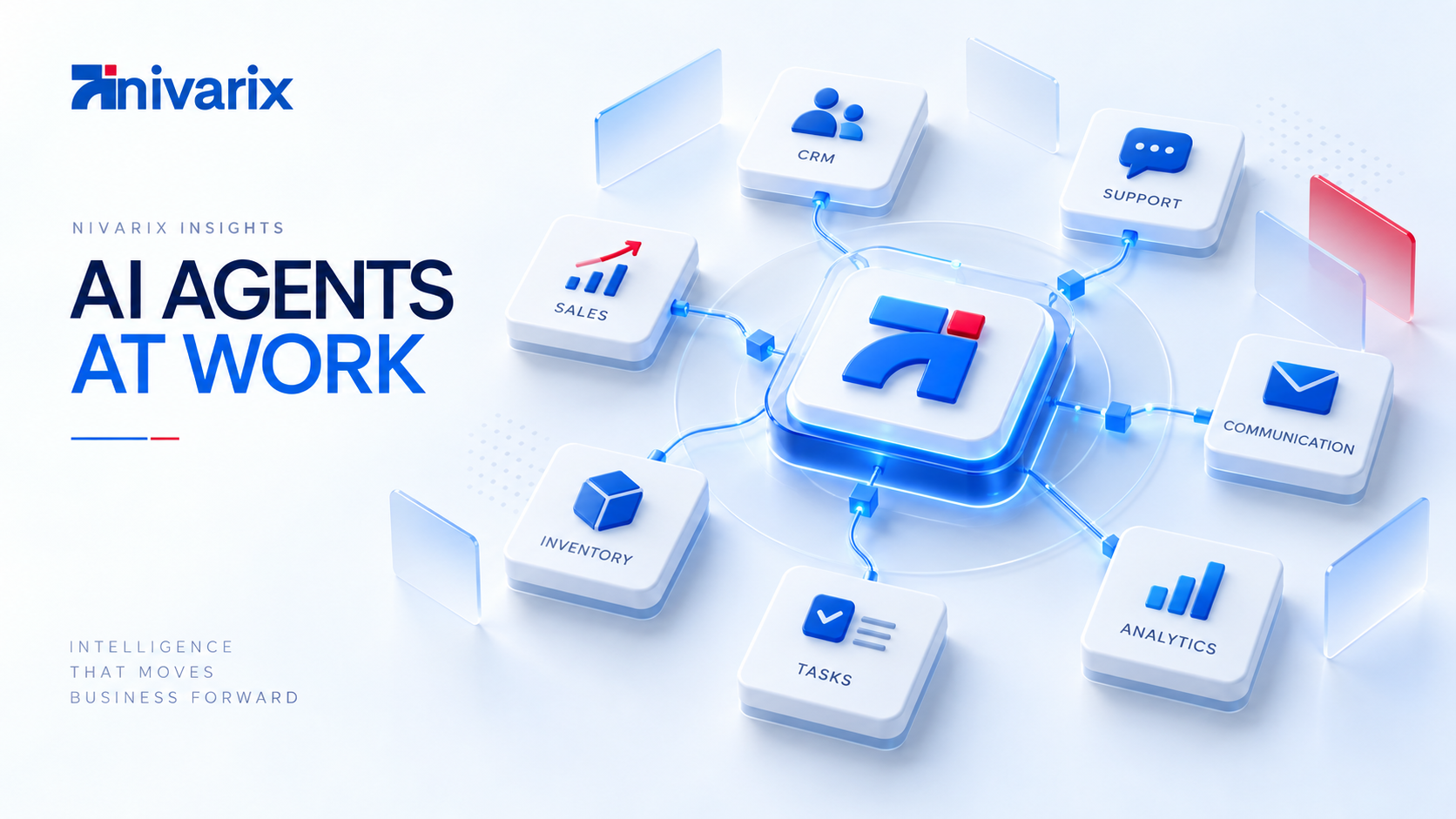
AI automation is most useful when it removes repetitive work, speeds up response times or helps a team handle more volume without adding unnecessary complexity. Nigerian businesses do not need to automate everything. The best starting point is usually one frequent workflow with clear inputs, clear rules and a measurable outcome.
15 practical AI automation use cases
- Customer support triage: classify questions, suggest replies and route complex issues to the right person.
- WhatsApp enquiries: answer common questions, capture lead details and hand qualified conversations to sales.
- Lead qualification: score enquiries based on budget, urgency, location, business type or product interest.
- Appointment booking: collect preferred times, check availability, confirm appointments and send reminders.
- Follow-up automation: trigger reminders when a lead, invoice, proposal or task has been inactive for too long.
- Document extraction: pull names, invoice numbers, dates, totals or form fields from uploaded documents.
- Internal knowledge search: let staff ask questions across approved policies, manuals, product documents or procedures.
- Email assistance: summarize long threads, draft responses and highlight messages that need action.
- Report generation: turn database or spreadsheet data into weekly management summaries.
- Invoice and payment workflows: prepare invoices, send reminders and flag unpaid accounts for review.
- Social content operations: turn approved ideas or long-form material into draft posts for human review.
- Sales call notes: transcribe calls, summarize next steps and update CRM records.
- Inventory alerts: detect low stock, unusual movements or items approaching reorder thresholds.
- Quality checks: review structured submissions for missing fields, inconsistencies or policy exceptions.
- AI agents with human approval: allow AI to perform multi-step work while requiring approval before sensitive actions.
Where should a Nigerian business start?
Start with the workflow that creates the most repetition or delay. A clinic may begin with appointment reminders. A distributor may begin with stock alerts and order updates. A professional-services firm may begin with lead capture, proposal follow-up and document search.
A useful rule: automate a stable process before automating a chaotic one. If the team cannot explain the workflow clearly, adding AI usually makes the confusion faster.

AI tools versus custom AI automation
Off-the-shelf tools are ideal when the business need already fits an existing product. Custom automation becomes valuable when several systems must work together, when the workflow is unique, when access control matters or when the business needs its own data and logic behind the AI.
What should be measured?
- Response time before and after automation.
- Hours of repetitive work removed each week.
- Conversion or follow-up rate.
- Error rate and number of manual corrections.
- Cost per completed workflow.
- Percentage of cases that still require human intervention.
Safety and control matter
Not every task should run without supervision. Payments, sensitive records, legal decisions, medical decisions, account permissions and irreversible actions should have clear approval rules. Good automation includes audit logs, access limits, escalation paths and a simple way for people to take control.
How Nivarix can help
Nivarix can help businesses map repetitive workflows, connect existing tools and build custom software or AI-assisted systems where off-the-shelf products are not enough. The focus should be measurable operational improvement rather than adding AI simply because it is fashionable.
Frequently asked questions
Does AI automation replace staff?
It can remove repetitive tasks, but many successful implementations keep people responsible for judgment, exceptions, relationships and sensitive decisions.
Can a small Nigerian business use AI automation?
Yes. A small business can start with simple customer support, content, scheduling or follow-up workflows before investing in more advanced custom systems.
What is the best process to automate first?
Choose a high-frequency task that follows consistent rules and already consumes meaningful staff time. That makes the benefit easier to measure.
Related reading: AI integration costs and process.
Photography: cover by Stephen Dawson; article photo by Austin Distel, via Unsplash. Photos are illustrative.