The cost of developing custom dental software depends on the scope of the clinical and administrative workflows, the number of locations, integration with existing systems and the obligations associated with patient information. A limited appointment and intake extension is a different project from replacing the clinical record, billing and scheduling platform across a dental group.
To establish a budget, estimate engineering effort and separately allow for clinical review, migration, security assessment, training and operation. As illustrative planning scenarios, 200 hours at $50 per hour produces a $10,000 engineering allowance; 600 hours at $60 produces $36,000; 1,500 hours at $80 produces $120,000. These are constructed examples, not quoted prices or measured market ranges. Highly regulated, multi-site or deeply integrated projects can require substantially more effort. Reusing a suitable established software foundation may reduce some work, but it does not remove the need to validate the specific deployment.
1. Define the software boundary before requesting a price
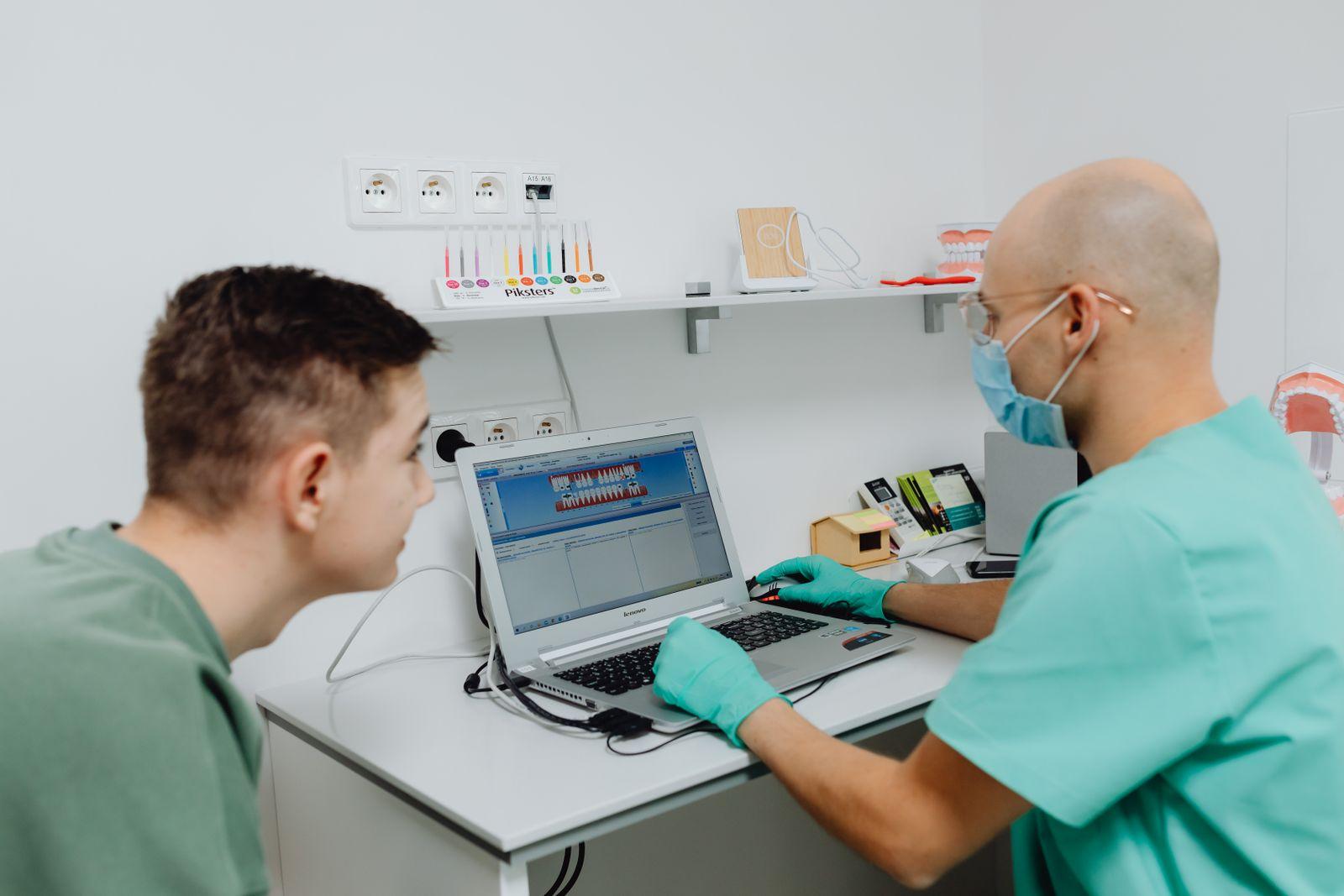
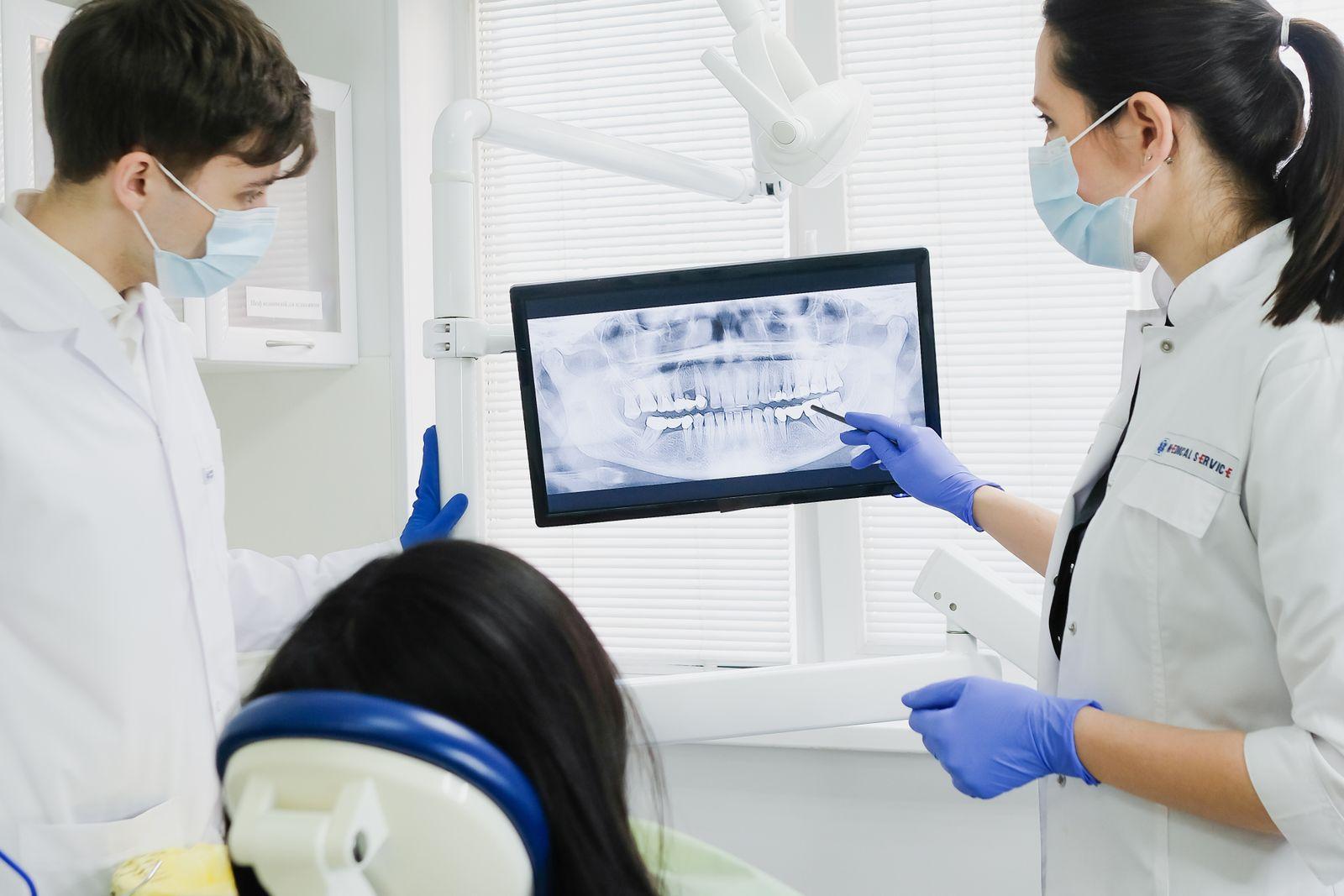
A dental practice has several distinct technology needs. Its website explains services and helps patients make contact. Its practice management system coordinates appointments, patient information, clinical records and business operations. Its patient portal gives appropriately authenticated users access to selected services. Diagnostic devices and specialist imaging applications may have their own storage, interfaces and regulatory requirements.
A practice does not necessarily need one new application to replace all of these systems. If the existing practice management software is reliable but the booking experience is inadequate, an integrated website or patient portal may be the better investment. Where essential clinical and administrative work is fragmented across incompatible tools, a more substantial redesign of the software environment may be justified.
| Scope | Example deliverables | Main cost uncertainty |
|---|---|---|
| Website and intake extension | Appointment requests, intake, staff review | Availability of supported PMS interfaces |
| Single-practice operating system | Scheduling, patient records, workflows, billing | Clinical requirements and legacy data |
| Multi-location platform | Shared patient identity, branch operations and reporting | Access boundaries, scale and reconciliation |
| Specialist clinical integration | Imaging, claims, laboratory or external record exchange | Vendor APIs, licensing, validation and regulation |
2. Estimate by module, including the work patients never see
The following is an example of how a team might distribute 600 engineering hours for a narrowly defined single-practice implementation based on reusable components. It is a planning worksheet, not a promise that a complete practice management product can be delivered within that allowance.
| Work package | Assumed hours | At $60/hour |
|---|---|---|
| Discovery and workflow definition | 45 | $2,700 |
| Scheduling and reception | 90 | $5,400 |
| Patient and clinician workflows | 125 | $7,500 |
| Invoices, payments and reporting | 95 | $5,700 |
| Identity, permissions and audit | 75 | $4,500 |
| Migration and agreed integrations | 80 | $4,800 |
| Deployment, QA and training | 90 | $5,400 |
| Total | 600 | $36,000 |
Allow separately for external clinical validation, compliance advice, specialized security testing, licenses, imaging interfaces, hardware, complex historical conversion and any requirements not included in this scenario. Ask each supplier to identify the interfaces and clinical review already included in the estimate.
3. What makes a dental system expensive to operate?
Appointments appear straightforward until availability must reflect clinicians, chairs, treatment durations, working hours, cancellations and multi-location schedules. Billing becomes more complex when invoices, partial payments, reversals, credits and insurance-related transactions must agree with accounting records. Clinical workflows need correct patient identification, appropriately restricted record access, amendments and reliable audit history.
A new interface also needs to fit the way staff work when they are busy. A receptionist should not have to search five screens to check in a patient. A clinician should not have to grant broad billing permissions just to see a treatment plan. The design should be evaluated with representatives of each role using realistic test cases.
Integration costs depend on actual interfaces. HL7 FHIR is a standard for exchanging healthcare information 1, but its existence does not mean that every dental vendor supports the same resources, operations or authentication. Request API documentation, sandbox access and commercial integration terms before finalizing the scope. Do not assume imaging devices can be connected without specialist work.
4. Plan for security, privacy and compliance
Health information requires special care. In the United States, determine whether HIPAA applies and whether vendors need business associate agreements. For UK deployments, health information is special category data under UK GDPR, with additional processing requirements 2 · 3. Nigerian practices can start with the Nigeria Data Protection Act and confirm what applies to their work with a qualified adviser 6. The requirements differ by jurisdiction and activity.
Build security into the budget rather than adding it after the system is complete. Relevant controls include individual staff accounts, role- and record-level authorization, appropriate encryption, audit logs, tested backups, incident response, retention policies and access removal when staff leave. Verify which suppliers can process health information and under what terms. Neither using a cloud provider nor implementing a checklist alone establishes legal compliance.
5. Calculate the three-year ownership budget
An illustrative ownership scenario starts with the $36,000 engineering allowance above, adds $9,000 for separately scoped assessment, data work and contingency, and assumes $1,200 per month for hosting, maintenance and support. The three-year total would be $88,200 ($45,000 + $43,200), before applicable taxes, specialist licenses and additional features. Compare that with the actual three-year subscription quote for a product that meets the same requirements. Do not compare a fully supported subscription with an unsupported custom build as if they were equivalent.
For practices in Nigeria and elsewhere, request pricing in a currency suitable for the contract and clarify who bears exchange-rate risk. If local infrastructure or connectivity is unreliable, agree on operational fallback procedures and recovery expectations.
6. Ask developers for evidence before signing
Request a workflow demonstration using synthetic patient data, a list of integrations that have actually been verified, a migration approach, security responsibilities and a support agreement. Ask what the practice owns: data, source code, configuration, domain, hosting accounts and any reusable licensed components. Agree on acceptance tests for booking, record access, invoices, failed payments, backups and export.
Nivarix has developed SmileFlow Dental OS, a dental practice management product with connected clinical and administrative workflows. Our public portfolio provides evidence of the product and a dental website project 4 · 5. This provides a relevant foundation for discussing a customized implementation; the requirements and cost of each practice still need to be assessed individually.
Frequently asked questions
Is custom dental software always more expensive than subscription software?
Its upfront investment is often higher, but the total cost depends on scope, recurring fees, maintenance and the value of workflow improvements.
Can we retain our existing dental software?
Yes, when the required integration is supported and replacement is unnecessary.
Does a patient portal have to be included?
No. Add it when it solves a patient need and its access controls can be safely maintained.
How long does development take?
A reliable schedule depends on discovery, integration access, clinical review and migration requirements. Avoid accepting a delivery promise before those dependencies are understood.
Discuss a custom dental software project
Share your practice size, current tools, location, clinical and billing requirements, and the workflows you want to improve. Nivarix can explore an implementation adapted to your operations, rather than assuming that every practice needs the same software subscription.
Discuss a custom dental software project
Related guides and services
- Compare custom and subscription dental systems
- Estimate a dental patient portal
- Plan a dental software migration
- Map the website-to-reception handoff
- Explore custom dental software
- View the Smile On Dental website in the Portfolio
- View SmileFlow Dental OS in the Portfolio
Sources
Checked 29 November 2026.
- HL7 FHIR overview
- HHS, business associates
- ICO, special category data
- Nivarix SmileFlow portfolio
- Nivarix Smile On Dental portfolio
- Nigeria Data Protection Act 2023
Cover photograph by Pavel Danilyuk, via Pexels.