A subscription-based POS system is usually the better starting point for a small retailer with standard checkout and stock requirements. Custom POS software becomes worth evaluating when existing products cannot support essential workflows, integrations or business controls at a reasonable cost. The decision should depend on the real cost of operating the system over several years, not merely on whether a vendor charges monthly or once.
A shop can pay a low monthly fee and still lose money through stock discrepancies, repeated manual reconciliation and avoidable work. Equally, a business can spend millions developing software it did not need because an existing product could have handled the same requirements. Neither ownership model automatically produces the better result.
This comparison concerns retail point-of-sale software that records products, sales, stock and receipts. It is not a guide to starting a POS agency banking business or buying a payment terminal.
1. What are you actually purchasing?
There are at least four commercial models, not just two.
| Model | What you acquire | Main consideration |
|---|---|---|
| Subscription POS | Access to maintained software while paying a recurring fee | Plan limits, renewal charges and vendor dependence |
| Perpetual licence | Contractual right to use a specified software version | Updates, hosting and support may be separate |
| Configured ERP/POS | Existing platform adapted through configuration or extensions | Module compatibility and upgrade obligations |
| Custom development | Software engineered around agreed business requirements | Build, maintenance, ownership and operational responsibility |
A one-time licence is not necessarily custom software. A custom system may also include a recurring managed support agreement. Always read the contract rather than making assumptions based on marketing terminology.
Invema advertises both a one-time Standard purchase and a Business plan with a per-shop annual renewal 2. MartPoint advertises retail plans for different store requirements 1. Ask which checkout features are available during an outage and which plan you need. These examples come from provider materials.
2. Compare the functions that affect your business
| Requirement | Subscription system | Custom system |
|---|---|---|
| Standard checkout | Usually available immediately | Must be implemented and tested |
| Barcode and printer integration | Depends on supported equipment | Can be designed for specified hardware |
| Branch-specific prices | Check plan and configuration | Can reflect agreed pricing rules |
| Wholesale and retail stock units | Test conversion and rounding | Can model packs, cartons and units explicitly |
| Unusual approvals | Limited to available settings | Can reflect actual approval chain |
| Existing accounting integration | Depends on available APIs | Can be scoped to supported interfaces |
| Offline operation | Depends on vendor architecture | Can be designed around defined outage scenarios |
| New features | Vendor roadmap or paid requests | Your roadmap, subject to development budget |
| Data export | Verify format, completeness and frequency | Define in delivery contract |
Do not pay to customize a process merely because it is familiar. First ask whether a simpler operating procedure would eliminate the problem. Custom development is most valuable when the requirement protects revenue, improves control, enables a differentiated service or removes a measurable bottleneck.
3. Calculate three-year total cost of ownership
Imagine a retailer with four stores. The following figures are hypothetical inputs for an ownership worksheet, not observed market prices.
| Expense | Subscription option | Custom option |
|---|---|---|
| Setup, configuration or development | ₦250,000 | ₦3,400,000 |
| Migration and staff training | ₦200,000 | ₦300,000 |
| Software subscription | ₦35,000/store/month | Included in build |
| Additional integration support | ₦40,000/month | Included in support assumption |
| Hosting and maintenance | Included in assumed subscription | ₦90,000/month |
| Three-year total | ₦6,930,000 | ₦6,940,000 |
Subscription: ₦450,000 + 36 × (4 × ₦35,000 + ₦40,000). Custom: ₦3,700,000 + 36 × ₦90,000.
The totals are almost identical. A decision based on these assumptions would therefore depend more on capabilities, delivery risk and flexibility than on the headline price.
Exclude hardware only when it is genuinely equivalent across both options. Add replacement printers, devices, connectivity, payment processing, taxes where applicable, annual increases and staff time if they differ. Include major changes and eventual migration. If a provider bills in foreign currency, test what happens if the exchange rate moves against your budget.
Now change the number of stores to six while keeping the other assumptions unchanged. The subscription option rises to ₦9,450,000. But do not assume the custom option stays flat in a real deployment: extra sites may require hosting, onboarding and support. Sensitivity analysis matters more than a single break-even claim.
4. Test the failure cases before signing
Ask each supplier to demonstrate the following using your own product sample and representative hardware.
| Test | Required outcome |
|---|---|
| Internet disconnects during cash sale | Sale survives and can be reconciled |
| Transfer is not yet confirmed | Payment remains pending; no false paid receipt |
| Cashier scans a carton instead of a unit | Correct unit conversion and price |
| Printer runs out of paper | Sale remains saved; authorized reprint works |
| Manager approves a refund | Original transaction remains auditable |
| Two stores attempt stock transfers | No double-counted inventory |
| Cashier's account is disabled | Access ends according to documented policy |
| Subscription ends or support changes | Business can obtain usable historical records |
Record the software version, hardware, observed result and any exceptions. A polished product demonstration is not equivalent to passing these tests.
5. Protect your ownership and ability to migrate
For subscriptions, verify export access before paying. A CSV containing only sales totals is not sufficient for a complex migration. You may require line items, item identifiers, tax rules, customer credits, refunds, suppliers and inventory movements.
For custom builds, clarify whether the agreement includes source-code delivery, intellectual-property rights, access to hosting, database backups, documentation, third-party licences and procedures for transferring maintenance to another team. Paying for development does not by itself establish every ownership right. The contract must do that.
Assign an internal person to maintain the product catalogue and approve pricing changes. Even the best software cannot compensate for an ownerless operational process.
6. Decide with a practical scorecard
Score each candidate from 0 to 5, then multiply by the weight divided by five.
| Criterion | Weight |
|---|---|
| Essential workflow fit | 25 |
| Reliability and offline handling | 20 |
| Three-year cost | 20 |
| Stock and financial controls | 15 |
| Data portability and ownership | 10 |
| Implementation and support | 10 |
| Total | 100 |
Treat failed essential requirements as disqualifying regardless of score. For instance, a pharmacy cannot accept missing batch traceability just because a system scores well on price. Give the same requirements and test data to every bidder.
Frequently asked questions
Is custom POS software always cheaper in the long run?
No. Development, maintenance, infrastructure and changes can outweigh subscription savings. Model both options with the same scope.
Can I start with a subscription and later develop my own system?
Yes. Choose a vendor that allows meaningful exports, and establish consistent product identifiers from the beginning.
Does custom POS software work without internet?
Only if offline operation is part of the architecture and tested. Electronic payment verification can still depend on external networks.
Can both types print receipts?
Many can, but confirm compatible printers, paper size, receipt content, reprint controls and refund handling.
Discuss your POS requirements with Nivarix
If an existing POS meets your requirements, use it. If your operation needs specialized checkout, inventory, branch controls or integrations, Nivarix can help evaluate the gap and scope a custom system. Start with your actual workflows and the scorecard above.
Related guides and services
- Estimate the cost of building a custom POS
- Test offline checkout and recovery
- Compare POS products for Nigerian businesses
- Explore Nivarix operational systems
Sources
Checked 29 November 2026.
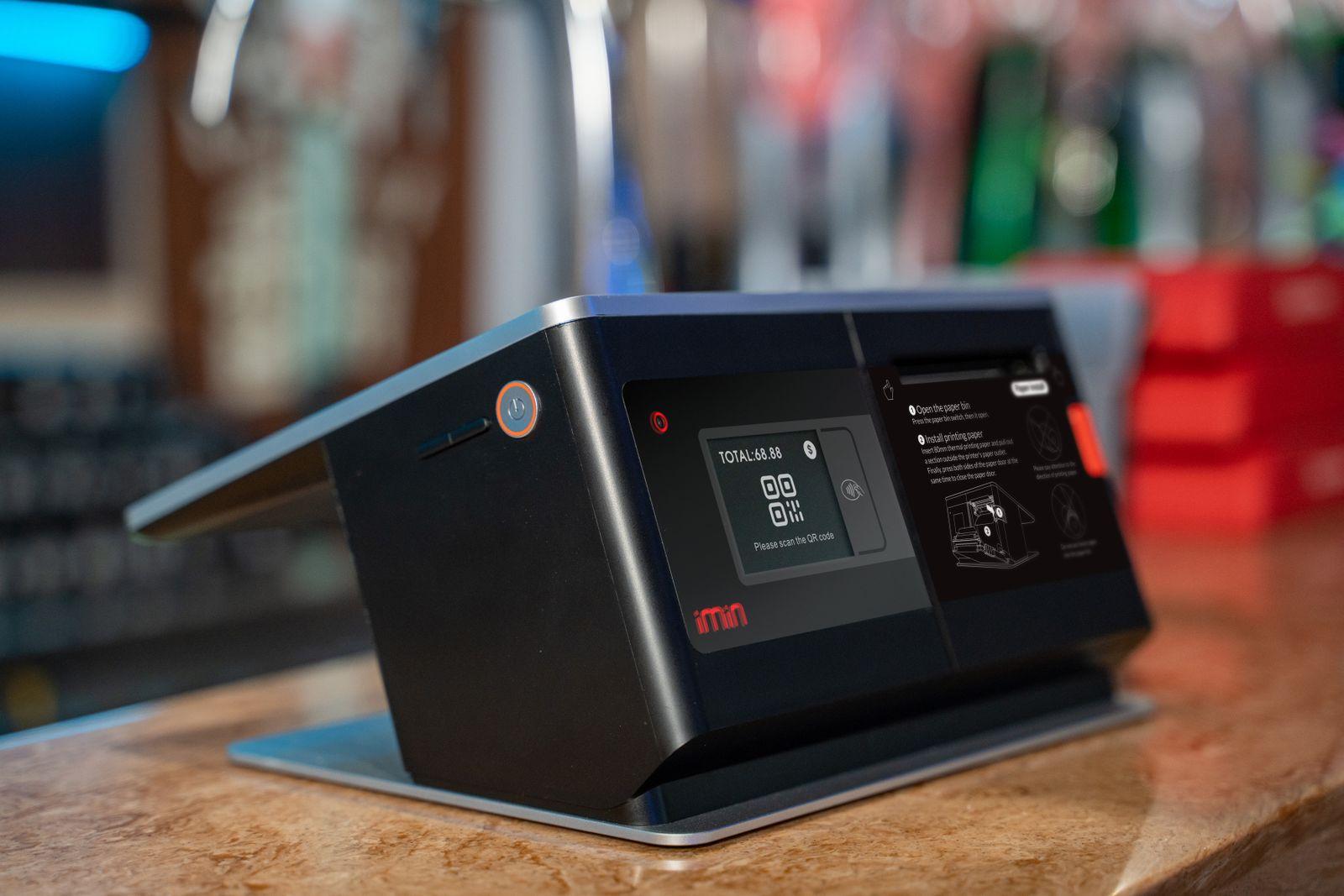
Cover photograph by iMin Technology, via Pexels.