The cost of a custom POS system in Nigeria depends on what the software must do, the number of branches and checkout devices, hardware compatibility, offline requirements and the integrations needed to manage the business. A basic single-location checkout system is a smaller engineering project than a multi-branch retail platform with warehouse transfers, supplier purchases, accounting and reliable offline synchronisation.
A Nigerian retailer should first distinguish a point-of-sale payment terminal from retail management software. A terminal facilitates payments; the retail system records what was sold, applies prices and discounts, produces receipts, manages stock and supports reconciliation. A bespoke project may connect the two, but they are not the same purchase.
When is a custom POS system worth developing?
For a shop with conventional checkout and inventory needs, a packaged product may be the most economical option. InkeepX publishes plan limits and pricing by tier; MartPoint offers retail software with separate scoped implementation services. Verify current plan prices, device and branch limits, features and onboarding costs.
Custom development becomes more relevant when existing tools cannot model your operations safely. Examples include wholesale customer-specific pricing, serial-number tracking, multi-stage approval of returns, multiple warehouses, tailored stock movements or integration with an existing business system. Quantify the cost of the current problem before deciding to commission software.
Essential modules and scope
| Module | What the system should support |
|---|---|
| Checkout | Barcode lookup, quantities, price rules, discounts and taxes as applicable |
| Payments | Record cash, confirmed electronic payments, split payments if required and outstanding balances |
| Receipts and invoices | Unique sale references, itemised totals, printing and reprinting controls |
| Inventory | Stock receipts, sales deductions, adjustments, counts and audit history |
| Staff | Individual logins, roles, shift management and approval rules |
| Reports | Sales by period and branch, cash reconciliation, stock movements and exports |
| Administration | Product catalogue, pricing, configuration and backup/recovery |
| Integrations | Accounting, ecommerce, payment or warehouse systems where needed |
A receipt records a completed transaction; an invoice can represent an amount due. Define their separate lifecycle, numbering and payment status. Where applicable, ask an accountant or compliance specialist to verify the current tax and invoicing requirements for the business. Do not assume a printed receipt alone satisfies every statutory obligation.
Offline checkout and hardware requirements
If checkout must continue during internet outages, include local persistence, transaction identifiers, a durable sync queue, conflict handling and reconciliation in the specification. Offline selling does not guarantee that bank card or transfer payments can be authorised without connectivity. A payment recorded as pending must not be counted as confirmed money.
Test the exact receipt printer, scanner, operating system, cash drawer and network configuration before buying equipment in volume. A thermal printer may connect by USB, Bluetooth or a local network; compatibility depends on the driver, device and application. Define the paper width, receipt format, tax fields, copy/reprint behaviour and what happens when the printer is disconnected.
A power contingency is separate from offline software. Provide suitable battery-backed devices or power equipment, and verify how the application resumes after an unexpected shutdown.
What do custom POS development projects cost in Nigeria?
On 29 November 2026, Nigerian development company Musskart publicly advertised ₦2 million–₦4 million for its starter custom POS scope, ₦4 million–₦8 million for its standard scope and ₦8 million–₦18 million or more for enterprise projects. Its described scopes differ by branch count, integration and inventory complexity. These are one company's stated commercial prices, not a market-wide minimum or an official Nivarix price. A narrowly scoped system built on reusable components may have different economics; obtain an actual quote after defining requirements.
The following model shows how to prepare a budget. All inputs are hypothetical allowances for comparison, not supplier prices or approved Nivarix quotations.
| Development workstream | Single shop | Multi-branch retailer |
|---|---|---|
| Requirements and workflow design | ₦150,000 | ₦300,000 |
| Checkout and receipt workflow | ₦450,000 | ₦800,000 |
| Inventory and product administration | ₦400,000 | ₦950,000 |
| Roles, reports and reconciliation | ₦350,000 | ₦750,000 |
| Offline/sync engineering | ₦350,000 | ₦1,000,000 |
| Hardware and other integration engineering | ₦250,000 | ₦650,000 |
| Testing, migration and rollout | ₦300,000 | ₦650,000 |
| Illustrative development total | ₦2,250,000 | ₦5,100,000 |
The larger scenario assumes shared catalogue and stock reporting, multiple locations and more rigorous sync and rollout work. Complex pharmacy, hospitality, regulatory or warehouse functionality would require additional scoping. No development price should be accepted on the basis of this table alone.
Hardware and operating budget
| Expense | Budget method |
|---|---|
| Checkout devices | Number of tills × verified device quotation |
| Receipt printers and scanners | Per-till equipment, spares and paper costs |
| Power and network equipment | Per-location requirements and installation |
| Payment processing | Transaction volume × applicable provider fee schedule |
| Cloud/backup infrastructure | Actual storage, computing and backup requirements |
| Maintenance and support | Defined support hours, fixes, updates and feature scope |
Request current hardware quotations using exact model numbers. Prices vary and a cheap device that fails during busy periods can be more expensive than reliable equipment. Payment providers may charge fees separately from POS development: consult the applicable schedule, such as Paystack Terminal pricing documentation, rather than assuming the software subscription includes all transaction charges.
Compare custom development with subscriptions over three years
Consider an illustrative business evaluating a packaged system costing ₦25,000 per month, with ₦150,000 onboarding and ₦180,000 hardware. Over 36 months, assuming an unchanged subscription, the fixed cost would be ₦1,230,000. A hypothetical custom alternative costing ₦2,250,000 to develop, ₦180,000 in hardware and ₦40,000 per month for support and infrastructure would total ₦3,870,000 over the same period. Both exclude taxes, payment fees and later changes. The packaged option is cheaper in this example.
The custom project is only justified if it provides sufficient additional value: fewer manual reconciliations, reduced operational errors, necessary integrations or a workflow the packaged solution cannot support. A custom system does not eliminate recurring costs. Compare data export, ownership rights, support, maintenance and portability as well as price.
Acceptance checklist before signing off
Test the real workflows with representative products and hardware. Complete a sale, print and reprint a receipt, perform an authorised return, verify the stock movement, reconcile a cash shift, simulate a failed payment, disconnect the network, reconnect and confirm that no sale is duplicated. Check that cashiers cannot change administrative settings without authorisation. Restore a backup into a separate environment and verify that reports match known transactions.
Agree on post-launch defect support, update responsibility, source-code and data rights, staff training, deployment and the process for adding features. A demo dashboard is not evidence that these workflows operate reliably.
Frequently asked questions
Can the software print receipts and invoices?
Yes, when included in scope and tested on the intended printer and document workflow.
Can it work offline?
Local checkout can be designed to work offline. Payment authorisation, central reporting and synchronisation may be limited until connectivity returns.
What hardware is needed?
It depends on the store: checkout device, compatible printer and scanner, payment terminal where required, and power or network equipment.
Can I manage multiple branches?
Yes, if branch-level stock, transfers, permissions, synchronisation and reporting are part of the agreed architecture.
How much does maintenance cost?
Request a separate written plan covering support, infrastructure, security updates and changes. There is no universal fee.
Plan a POS system around how your business trades
If you are choosing a ready-made product, read our POS software comparison. If the requirements go beyond standard features, our operational systems team can discuss a tailored checkout, inventory and reporting workflow. Request a scoped project estimate.
Take the offline POS acceptance checklist into the hardware and software trial.
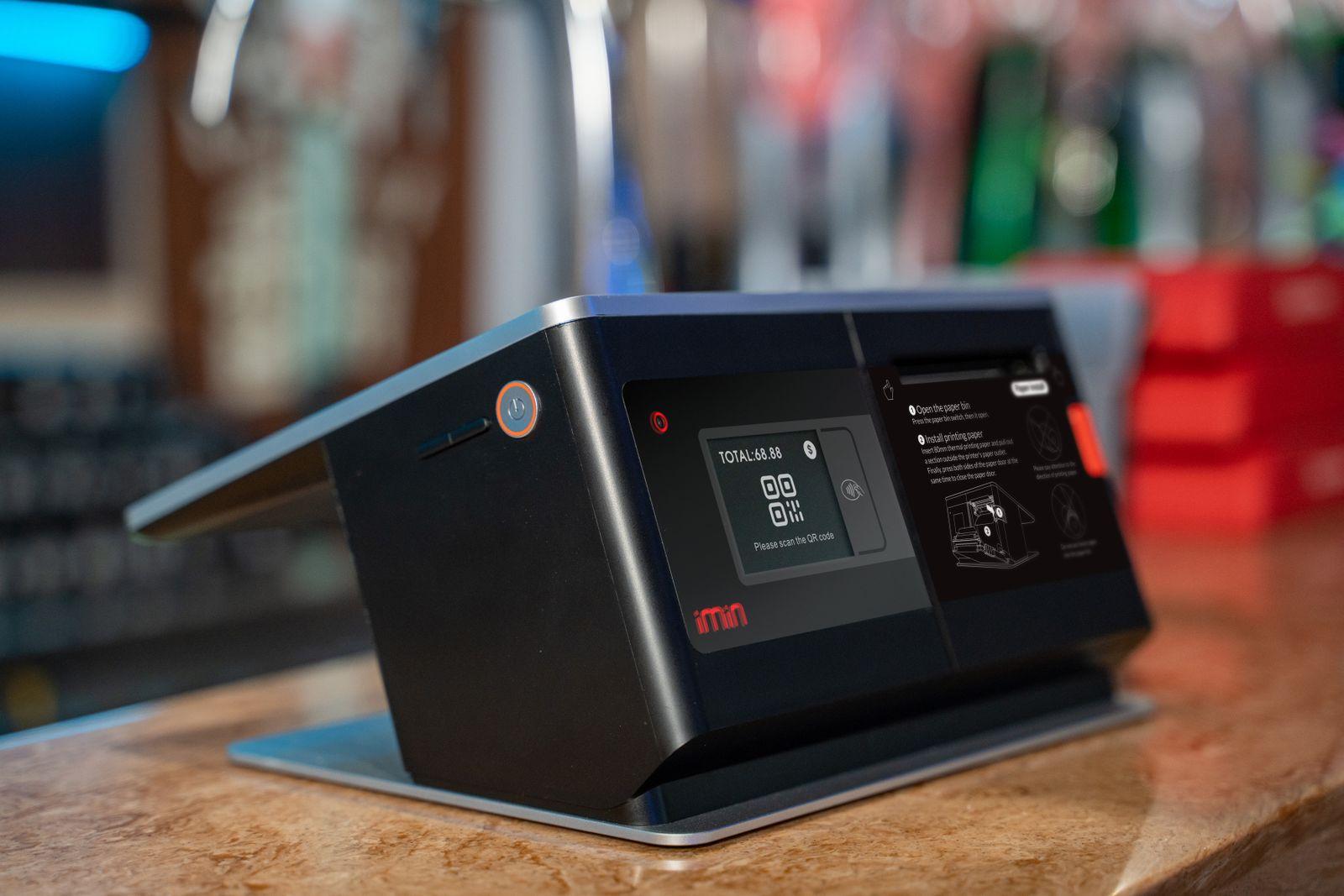
Cover photograph by iMin Technology, via Pexels.